

Tosca - English National Opera tickets

About Tosca - English National Opera
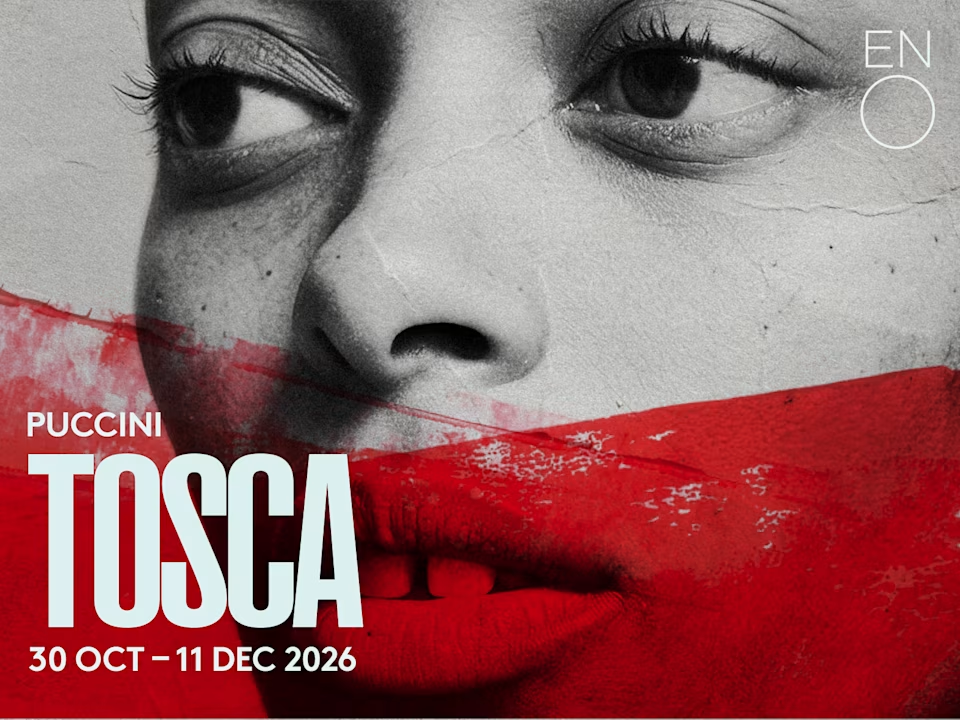
Following the critical success of Dead Man Walking in 2025, ENO’s Artistic Director Annilese Miskimmon reimagines this timeless opera, exploring the art of resistance and love in the face of political censorship.
Set in a concert hall in an unidentified European state overtaken by civil conflict, opera singer Floria Tosca plans a secret meeting with her lover, the painter Mario Cavaradossi. When the corrupt police chief Scarpia intervenes, a place of music is transformed into a site of fear and violence. Over the course of one night, Tosca is forced to fight for her love, her honour and her life.
More than a love story. This is an opera about resistance in the face of oppression, and the enduring power of love and art to defy tyranny.
Enjoy Tosca as a stand-alone performance, or as a companion piece to Kaija Saariaho’s Adriana Mater as part of a broader exploration of the human cost of war and the resilience of the human spirit. Both operas feature in our unmissable 2026/27 season.
BSL Interpreted:
- Tuesday, 10th November, 7:30pm
Relaxed:
- Monday, 30th November, 5:00pm (bookable via venue only)
Know before you go
Sung in English, with surtitles projected above the stage.
Run time
2hr 10min. Incl. 1 interval.
Venue
Categories
Opera, Drama, West End, Must-See
Age
Ages 15+. Children under 5 are not allowed in the auditorium.
Start date
30th October, 2026
End date
11th December, 2026
Emotional/originality and brilliant vocals
All the above.....good opera to see.
I was genuinely disappointed with this production of Tosca. I had been looking forward to experiencing Puccini’s opera, but unfortunately, many of the directorial and staging choices made it difficult to appreciate the work as intended. Although the performance was advertised in English, several passages were sung in Italian, particularly towards the beginning. While I appreciate that some sections, such as the prayers, may traditionally be performed in Italian, the inconsistency was somewhat confusing. My greatest disappointment, however, was the lack of historical atmosphere. The opera is set in Rome in 1800, yet Tosca’s costume — a beige knitted dress with a black belt — felt entirely out of place. The policemen, dressed in dark leather jackets and trousers, looked more like modern gang members than officers of the period. These choices made it very difficult to feel immersed in the world of the opera. The stage direction was equally puzzling. Throughout the performance, groups of people repeatedly walked back and forth across the stage without any apparent purpose. This was particularly distracting during the scenes set in a church, where one would reasonably expect the congregation to be engaged in prayer or other religious activities. The staging often felt disconnected from the setting and the dramatic events taking place. I was also uncomfortable with the way the scene involving Scarpia's demand that Tosca surrender herself in exchange for Cavaradossi's freedom was portrayed. Rather than conveying the threat and psychological tension of the original scene, the production resorted to unnecessarily explicit physical gestures, including Scarpia removing his trousers and lifting Tosca's skirt. I found this approach crude and excessive, and felt it detracted from the dramatic power of the scene. The set design was another major disappointment. There seemed to be very little relationship between the props and the locations they were supposed to represent. The production used essentially the same bare stage throughout, with hardly any meaningful scenery or background to establish the different settings. The third act was particularly bewildering, with large pieces of stage furniture and props piled together in the centre of the stage, forming what looked like a mound of miscellaneous objects. I struggled to understand the artistic intention behind this arrangement. I understand that contemporary interpretations of classical operas can offer fresh perspectives, and I am not opposed to creative reinterpretations. However, in this instance, the modernisation seemed to come at the expense of the original work's atmosphere, historical context and dramatic integrity. The production offered little in the way of a coherent alternative vision to compensate for what had been lost. Tosca is a powerful opera with a richly defined setting and deeply compelling drama. Sadly, this production did not do it justice. I left feeling that the experience had been a considerable disappointment, and that the staging had distracted far more from Puccini's work than it had contributed to it.
Important information
This opera includes depictions of violence, murder, suicide and torture.
Tosca - English National Opera cast and creative team
By: Giacomo Puccini
Director: Annilese Miskimmon
Cast list: Axelle Fanyo, Chaz’men Williams-Ali, Christopher Purves, Craig Colclough
Venue
London Coliseum
Directions
Location: West End
Railway station: Charing Cross
Bus numbers: St. Martin's Lane 24, 29, 176 / 6, 9, 11, 13, 15, 23, 87, 91, 139
Night bus numbers: St. Martin's Lane 24, 176, N5, N20, N29, N41, N279 / 6, 23, 139, N9, N15, N11, N13, N21, N26, N44, N47, N87, N89, N91, N155, N343, N551
Car park: Q-Park: Chinatown (5mins) / Other: St Martin's Lane Hotel (1min)
Directions from tube: (3mins) Take Cranbourn Street until St Martin’s Lane, where you head right until you reach the theatre.
Show schedule
| Day of week | Evening |
|---|---|
| Monday | - |
| Tuesday | 7:30 PM |
| Wednesday | - |
| Thursday | 7:30 PM |
| Friday | - |
| Saturday | 6:00 PM |
| Sunday | - |
Frequently asked questions
What is Tosca - English National Opera about?
Following the critical success of Dead Man Walking in 2025, ENO’s Artistic Director Annilese Miskimmon reimagines this timeless opera, exploring the art of resistance and love in the face of political censorship.
What is the length of Tosca - English National Opera?
Tosca - English National Opera is 2hr 10min. Incl. 1 interval.
Where is Tosca - English National Opera?
London Coliseum.
What's the price for Tosca - English National Opera tickets?
The price for tickets to Tosca - English National Opera starts at £15.
How old do children need to be to see Tosca - English National Opera?
Ages 15+. Children under 5 are not allowed in the auditorium.
How do you buy tickets for Tosca - English National Opera?
Buy tickets today on Box Office. Check availability, pricing and more.
We are a member of the Society of Ticket Agents and Retailers (STAR) and operate within the code of practice STAR sets down for its members.